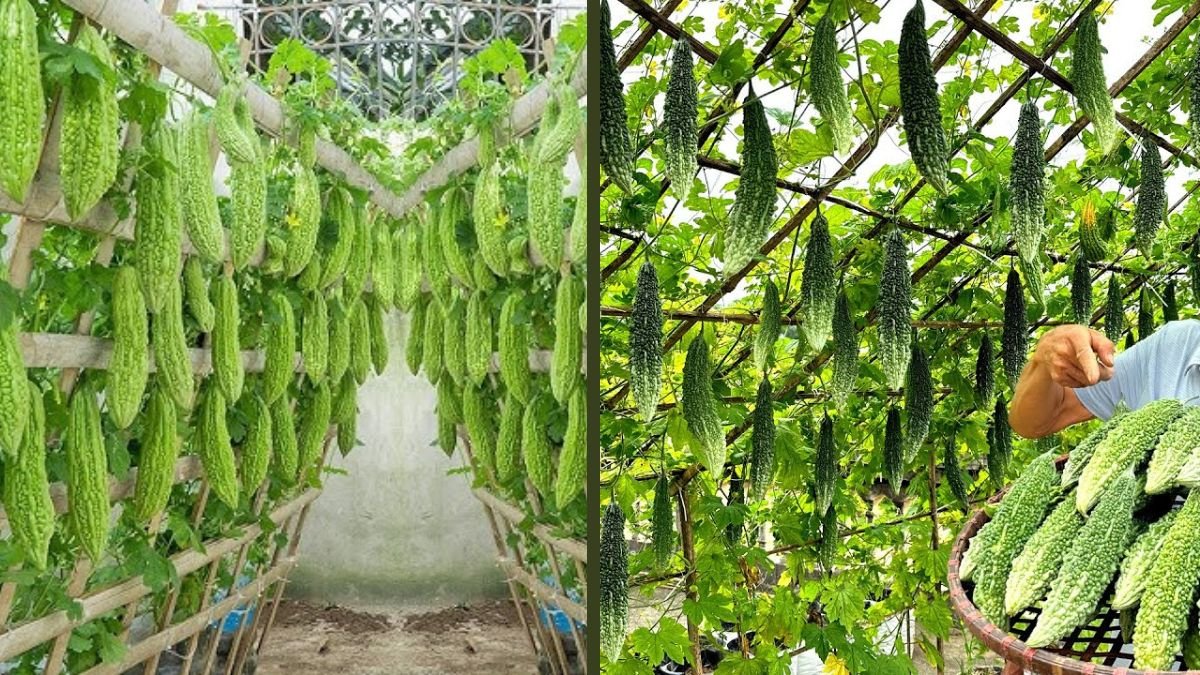
Introduction: Bitter Melon Abundance at Home
Bitter melon is a highly nutritious and medicinal vegetable. Many home gardeners struggle to achieve continuous fruiting. This guide reveals tips for abundant fruit production. Mothers can grow multiple fruits in small gardens. Proper care ensures flowering and fruiting throughout the season. Organic methods protect health. Step-by-step guidance simplifies the process. Small land or terrace plots can yield large quantities. Continuous fruiting is possible with pruning and training. Gardening becomes rewarding and sustainable. Consistency and monitoring increase productivity.
Understanding Bitter Melon Growth
Bitter melon is a vigorous climbing vine. It produces male and female flowers separately. Flowers appear quickly in warm weather. Fruit formation depends on balanced nutrition. Vines grow long and require support. Roots need loose, fertile soil. Understanding growth habits ensures effective care. Healthy vines produce multiple fruits. Knowledge of flowering improves harvest management.
Selecting the Right Variety
Choose early-maturing or high-yielding varieties. Disease-resistant types reduce losses. Local varieties adapt well to the climate. Healthy seeds ensure uniform germination. Selection impacts fruit size and number. Beginners benefit from easy-to-grow types. High-yield varieties boost confidence. Correct selection ensures continuous production.
Preparing Fertile Soil
Bitter melon prefers rich, loose soil. Mix compost or cow dung for nutrients. Cocopeat or dried leaves improve moisture retention. Avoid heavy clay soil. Fertile soil ensures strong vines. Proper soil enhances fruit size. Well-prepared soil reduces stress. Healthy roots support multiple fruits.

Seed Germination and Nursery Stage
Soak seeds overnight for faster sprouting. Sow in seed trays or small pots. Maintain moisture but avoid overwatering. Warm conditions promote uniform germination. Transplant seedlings after four to six inches of growth. Healthy nursery plants adapt well to soil. Controlled germination increases survival. Seedling care improves yield potential.
Latest Posts
- A Comprehensive Guide to Successfully Growing Grape Vines in Your Backyard for Beginners and Experts Alike
- Best Tips for Successful Mango Growth in Containers
- Discover the Simple Steps for Successfully Growing Coriander in a Pot
- Discovering the Ultimate Guide to Growing African Violets from Leaf Cuttings
- Simple Techniques for Successfully Growing Seedless Grapes in Home Gardens
- Ultimate Guide to Growing Balsam Plants Naturally for Vibrant Blooms
- Discover the Secrets to Growing Lush Leek Leaves with Simple Hacks for Beginners
- How to Successfully Cultivate Sweet Cherries in the Unique Climate of Canada
- The Ultimate Guide to Successfully Growing Beautiful Succulent Garden Plants at Home
- A Comprehensive Guide to Growing Dhania from Seeds for Beginners
Transplanting Seedlings
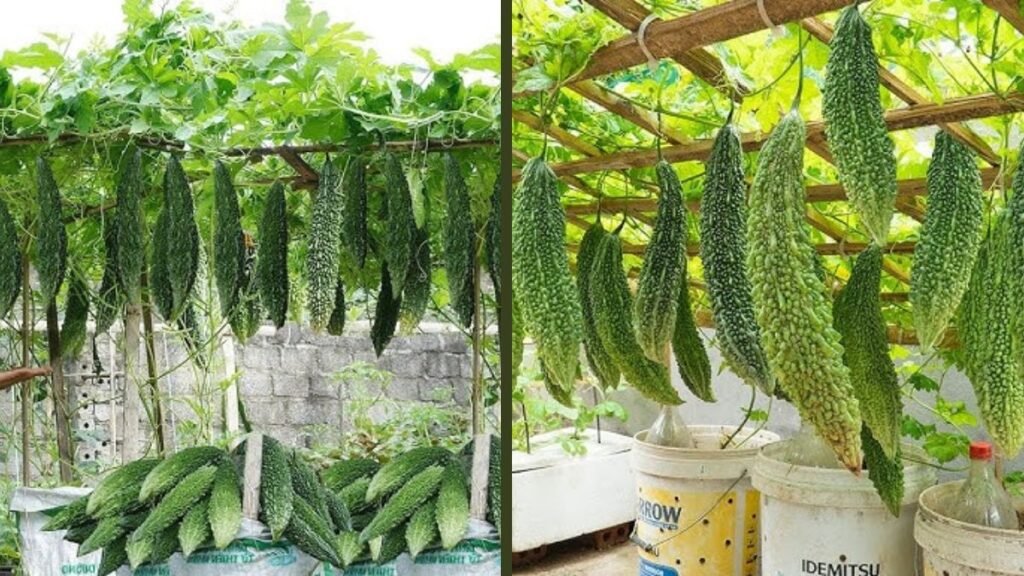
Transplant carefully to enriched soil beds. Maintain proper spacing for airflow. Mulch around seedlings to retain moisture. Avoid direct sun initially. Gentle watering prevents stress. Proper transplanting ensures strong vine establishment. Plants adapt quickly to garden conditions. Early care affects future fruiting.
Providing Support for Vines
Bitter melon requires vertical support. Use trellises, bamboo poles, or ropes. Vertical growth ensures multiple lateral branches. Fruits grow clean and straight. Proper support increases sunlight exposure. Airflow improves disease resistance. Healthy climbing produces more fruits. Simple support structures boost productivity.
Watering Practices
Consistent moisture is essential. Avoid waterlogging. Deep watering strengthens roots. Mulching reduces evaporation. Morning watering is ideal. Balanced moisture encourages flowering. Adequate hydration improves fruit quality. Proper watering supports continuous fruiting.
Fertilization Tips
Use organic compost or vermicompost regularly. Liquid compost tea accelerates nutrient absorption. Avoid excess nitrogen which favors leaves over fruits. Balanced nutrition encourages flowering. Regular feeding increases vine vigor. Healthy nutrition promotes multiple fruits. Organic care ensures safe consumption.
Pruning and Lateral Branch Training
Prune unnecessary shoots. Direct nutrients to productive branches. Encourage flowering shoots for continuous fruiting. Balanced pruning improves airflow. Overgrowth reduces fruiting. Proper training ensures multiple harvests. Healthy vines produce more flowers. Lateral shoot management increases total fruits.
Flowering and Pollination Management
Bitter melon flowers need proper pollination. Bees assist naturally. Hand pollination ensures fruit set if insect activity is low. Healthy flowers lead to multiple fruits per vine. Avoid damaging flowers. Proper management maximizes continuous fruiting. Observation ensures success. Timing is key.
Pest and Disease Management
Bitter melon faces leaf-eating insects. Neem oil spray is effective. Hand removal prevents spread. Maintain spacing to reduce fungal diseases. Healthy vines resist pests better. Avoid chemical sprays. Natural management ensures safe consumption. Regular monitoring protects yield.
Monitoring Fruit Development
Fruits appear after pollination. Maintain moisture and nutrients. Remove damaged flowers early. Observe vines regularly. Healthy fruits develop evenly. Continuous care encourages new fruiting. Balanced growth ensures abundant harvest. Early detection prevents loss.
Harvesting at the Right Time
Pick fruits tender and green. Use a knife or scissors. Avoid pulling vines. Frequent harvesting encourages continuous fruiting. Morning harvest preserves freshness. Proper timing ensures quality. Regular harvest prevents overgrowth. Correct handling improves vine health.
Post-Harvest Handling
Wash gently and store in a cool place. Avoid stacking tightly. Remove damaged parts. Fresh bitter melon lasts longer. Careful handling improves taste. Abundant harvest can feed the family or be shared. Post-harvest practice ensures prolonged supply. Clean handling maintains quality.
Comparison Table: Traditional vs Continuous Fruit Method
| Aspect | Traditional Method | Continuous Fruit Method |
|---|---|---|
| Soil | Basic garden soil | Fertile and enriched |
| Support | Minimal | Trellis or poles |
| Pruning | Rare | Regular for flowering |
| Watering | Irregular | Consistent and balanced |
| Yield | Moderate | High and continuous |
Benefits for Home Gardeners
Abundant vegetables reduce market dependency. Improves family nutrition. Promotes eco-friendly practices. Builds confidence for mothers. Surplus can be shared. Gardening becomes rewarding. Low-cost methods provide high returns. Continuous fruiting ensures satisfaction.

Sustainability and Long-Term Value
Organic soil care improves fertility. Vertical growth saves space. Multiple harvests enhance food security. Sustainable methods reduce chemical usage. Healthy vines produce longer-term yields. Eco-conscious practices benefit the environment. Continuous production increases confidence. Abundance encourages future planting.
Conclusion
By following practical steps, bitter melon can produce multiple fruits with continuous fruiting at home. Proper soil, watering, support, pruning, and organic care maximize yield. Even small plots can generate abundant vegetables. Mothers gain confidence and healthy produce. Simple structured methods make continuous fruiting easy and productive.